Category Archives: Jotwell
Oct 22, 2012 Daria RoithmayrJotwellJurisprudence
Yes, yes, I know this is the Journal of Things We Like. And I like, like, like Ian Haney Lopez’s essay, “Post Racial Racism: Racial Stratification and Mass Incarceration in the Age of Obama.” But to understand why I like it so much, I have to say a word about something I also liked, but not as much as I had wanted to.
A great deal of attention has been paid to Michelle Alexander’s book, The New Jim Crow: Mass Incarceration in the Age of Colorblindness. The attention is well deserved; Alexander is a great writer with an eye for a compelling narrative. But truth be told, I was left feeling a bit dissatisfied when I finished reading. How does the New Jim Crow racism actually work, structurally speaking, when it comes to mass incarceration? Is subconscious bias (by police) and naked political gain (by the architects of the war on drugs) really the entire story? Isn’t there a deeper, more coherent structural story to tell here with regard to cause? Continue reading "Prisons, Poverty And Power"
Oct 19, 2012 Michael J. ZimmerJotwellWork Law
Jerry Kang, Mark Bennett, Devon Carbado, Pam Casey, Nilanjana Dasgupta, David Faigman, Rachel Godsil, Anthony G. Greenwald, Justin Levinson & Jennifer Mnookin,
Implicit Bias in the Courtroom, 59 UCLA L. Rev. 1124 (2012).
Having a total of ten authors for one article would make this rather exceptional even without regard to the topic. That these authors participated together in a symposium on implicit bias is not a surprise. But what is unusual, if not exactly surprising, is that they together wrote this one article. This is not the typical scenario for the papers delivered at a conference. The ten include legal academics, scientists, researchers, and a sitting federal judge. Six are law professors, though two of them hold joint appointments. One is a research consultant for the National Center for State Courts, two are psychology professors and one is a federal district court judge. They all come to the study of implicit bias from their respective points of perspective but the article is a fully integrated article.
The question the article begins to answer is: What, if anything, should we do about implicit bias in the courtroom? The scientific literature on implicit bias and the role implicit bias might play has been the subject of considerable legal literature. Part I provides a clear, straightforward introduction to the science involved in understanding that implicit bias exists, what it is, and how it works. The article defines implicit attitudes and stereotypes as biases “not consciously accessible through introspection.” Accordingly, their impact on a person’s decision-making and behaviors does not depend on that person’s awareness of possessing these attitudes or stereotypes. Consequently, they can function automatically, including in ways that the person would not endorse as appropriate if he or she did have conscious awareness. If you remember, Ross Perot in the 1992 Presidential campaign gave a vivid example of implicit bias that gets disclosed unintentionally. While speaking at an NAACP meeting, Perot addressed his audience several times as “you people” or “your people.” Especially since the topic of the speech was crime and illegal drugs, many perceived Perot as expressing a stereotypical view of African Americans as being identified with crime and drugs. He had no incentive to be avowedly racist and there is no indication that he was conscious of the obvious inference listeners drew based on the language he used. Continue reading "Implicit Bias: Moving from Theory to the Courthouse"
Oct 17, 2012 Michael CarrollIntellectual Property LawJotwell
Michael Frakes & Melissa F. Wasserman
, Does Agency Funding Affect Decisionmaking?: An Empirical Assessment of the PTO’s Granting Patterns,
66
Vand. L. Rev. (forthcoming, 2013), available at
SSRN.
As patent law has grown in social and economic importance, a growing number of scholars have given attention to analyzing the structure of the patent system. The number of patents issued per year has increased significantly in the past few decades, and, in at least some fields, the breadth of products or activities on which these issued patent claims read has also increased. Scholars studying the system have given the design and functioning of the U.S. Patent and Trademark Office (PTO) increased scrutiny on a number of fronts. Among its many duties, central is the PTO’s power and obligation to decide whether the rights to control a putative invention belong to the patent applicant, to a different applicant, or to the public.
Although patent prosecution is an ex parte proceeding, the patent examiner stands between the applicant and the public in deciding who shall receive the entitlement to use, or exclude others from using, the invention. Due process norms usually require such decisionmakers to be unbiased and free from conflicts of interest. However, since 1991, the PTO has been paid to make this decision from fees paid by one of the parties to the decision: the applicants or patentees. Not surprisingly, senior PTO officials have on more than one occasion referred to applicants and patentees as the office’s “customers.” Might this financing arrangement affect the agency’s interpretation and application of the law? Most scholars have assumed that it does to some extent, but this extent and the operation of this assumed bias has been underexamined. Until now. Continue reading "Linking Financing To Decisionmaking In The U.S. Patent System"
Oct 12, 2012 Phyllis SmithJotwellTrusts & Estates
Gerry W. Beyer,
Will Contests – Prediction and Prevention, 4
Estate Planning & Cmty. Prop. Law J. 1 (2011),
available at SSRN.
Gerry W. Beyer’s Will Contests-Prediction and Prevention starts with a discussion of reasons to anticipate a will contest. He points out society has come to accept nontraditional families as a societal norm and yet the likelihood of a will contest increases when a decedent makes bequests that pass outside of what we define as a traditional family. Thus, for example, from a planning standpoint the best option for a testator involved in a same-sex relationship is to create a will because the intestacy laws will not make provision for the surviving partner. The article points out that even when the testator plans in advance, the likelihood of this will being challenged by a blood relative is much higher than when bequests are made to traditional family members.
Professor Beyer points out that historically, no-contest clauses have been used as a weapon to deal with the potential threat of a will contest. Even so, Professor Beyer points out that no-contest clauses are becoming less reliable as a deterrent because enforceability may be called into question. With that in mind, Professor Beyer offers an alternative solution — an incentive not to contest the will: In exchange for not challenging the will for a period of 2 years after the date of death, the beneficiary would receive a gift. Such a provision may be especially valuable for states where no-contest clauses are not enforceable. Continue reading "The Anatomy of a Will Contest"
Oct 9, 2012 JotwellJotwell
 Today we inaugurate a new Jotwell section on Torts, edited by Gregory Keating, William T. Dalessi Professor of Law and Philosophy at the USC Gould School of Law and Catherine Sharkey, Crystal Eastman Professor at New York University School of Law. Together they have recruited a stellar team of Contributing Editors.
The first posting in the Torts section is Insurance as Safety Regulator by Catherine Sharkey.
We intend to continue to add other new sections in the coming months — Health Law is next, with more to come. Please note our Call For Papers, and get in touch if you have suggestions for a new section, or if you have a review you would like to contribute to Jotwell.
Oct 8, 2012 JotwellJotwellTorts
Torts Section Editors
The Section Editors choose the Contributing Editors and exercise editorial control over their section. In addition, each Section Editor will write at least one contribution (“jot”) per year. Questions about contributing to a section ought usually to be addressed to the section editors.

Professor Gregory Keating
William T. Dalessi Professor of Law and Philosophy
USC Gould School of Law
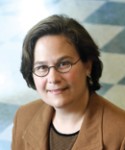
Professor Catherine Sharkey
Crystal Eastman Professor of Law
New York University School of Law Continue reading "Meet the Editors"
Oct 3, 2012 Stuart BannerJotwellLegal History
I think history is most fun to read when it upsets the conventional understanding of something in the present day. That’s a hard trick to pull off. Most conventional understandings are pretty close to the truth – otherwise they would have been abandoned already. And if you want to buck the conventional wisdom about something in the present, you’re more likely to succeed simply by explaining why it’s wrong in the present rather than by detailing its past. It takes an unusual combination of insight and luck to find a topic you can make readers see completely differently by writing its history.
Before I read Jed Shugerman’s The People’s Courts, I would never have guessed that judicial elections were that kind of topic. Like most lawyers, I suppose, I thought judicial elections were a little silly at best, and sometimes downright pernicious. How are voters supposed to know who the good judges are? And worse, how can elected judges prevent politics from leaking into their decisions? The last thing we want is for a judge to be keeping an eye on his reelection when he’s deciding, say, whether a notorious murderer’s rights have been violated, or whether a popular new law is unconstitutional. If you’ve ever been in a state with contested judicial elections and seen the TV commercials in which the candidates all claim to be the toughest on crime, you start to worry about the intrusion of politics. I imagine that’s the conventional understanding of judicial elections. It was certainly mine. Continue reading "Judicial Independence, But From What?"
Oct 2, 2012 Sida LiuJotwellLegal Profession
Bernard A. Burk & David McGowan,
Big But Brittle: Economic Perspectives on the Future of the Law Firm in the New Economy, 2011
COLUM. BUS. L. REV. 1 (2011)
available at SSRN.
Until the recent global financial crisis, elite law firms had been growing in size and number of offices for decades, both in the United States and across the world. Accordingly, the reasons behind law firm growth have fascinated legal scholars as well as social scientists studying the legal profession. Many theories have been formulated and tested by empirical research. Burk and McGowan’s article not only provides an excellent summary of these competing theories, but also proposes two new perspectives, namely, (1) relational capital and internal referral network; and, (2) technological innovation and transaction cost. Both are familiar theories in other research areas but neither had been applied to explain the growth of law firms.
In this essay, Burk and McGowan examine the evolution of large law firms in America from the late nineteenth century to the 2008 economic recession. Until the 1960s, most elite law firms have had a simple “partner-associate” two-tier structure following the Cravath System, which emphasized the long-term training of associates, the “up or out” rule of promotion, and the lockstep system for partners. Lateral hiring of partners were rare. As a result, firm growth was steady, featuring what Galanter and Palay have called law firms’ “internal growth engine.” From the 1970s to the mid-2000s, however, law firm growth entered an “explosive” era – the growth rate of elite firms jumped from 5% per year to 8% or more (p. 11). By the mid-1980s, the number of American law firms with more than a hundred lawyers had increased from a dozen to more than 250. The growth in size was accompanied by the expansion of geographic locations and lateral mobility. By 1988, over a quarter of the 500 largest American law firms had acquired more than half of their partners laterally. The lateral movement of associates had also become more frequent. As a result, the Cravath System was significantly eroded. Meanwhile, the formal structure of large law firms had become more complex – two-tier partnership was more commonly adopted, with an increasing proportion of non-equity partners and a higher leverage (i.e., associate-partner ratio) in most firms. Continue reading "Big and Innovative? The Future of Law Firms (Not Only the American Ones)"
Oct 1, 2012 Camille NelsonEqualityJotwell
It is a good thing when those of us in education are urged to be more thoughtful about what we seek to achieve through our teaching and scholarship. An analysis of the possible impact that education can have moves beyond the standard questioning of pedagogy, and speaks to the societal value of education as transformative, not just for the student and future graduate but also for society. Such higher order questions, as I like to call them, are not typically the stuff of faculty meetings, but they are at the core of a recent article by Professors Angela Mae Kupenda and Michelle Deardorff.
In their article, Negotiating Social Mobility and Critical Citizenship: Institutions at a Crossroads, the authors juxtapose two seemingly inconsistent struggles faced by institutions of higher education – improving the socioeconomic possibilities of our students versus preparing students for what they theorize as “Critical Citizenship.”: Continue reading "Is Critical Citizenship Critical?"
Sep 28, 2012 Lee EpsteinCourts LawJotwell
The U.S. Supreme Court: A Very Short Introduction is indeed a very short book (far shorter than most law review articles), but it is no “Supreme Court for Dummies.” To the contrary, it is a sophisticated, yet accessible, addition to Oxford’s Very Short Introduction series.
This much the author’s identity gives away. Though she now teaches at Yale Law School and no longer covers the Supreme Court full time, the fabulous Linda Greenhouse remains one of Court’s most astute students. (And she continues to write an opinion column for The New York Times website, which should never be missed for its insights on the current Court.) Continue reading "Introducing the Court"